
Germany's BESS Boom Meets Its Regulatory Moment of Truth
.png)
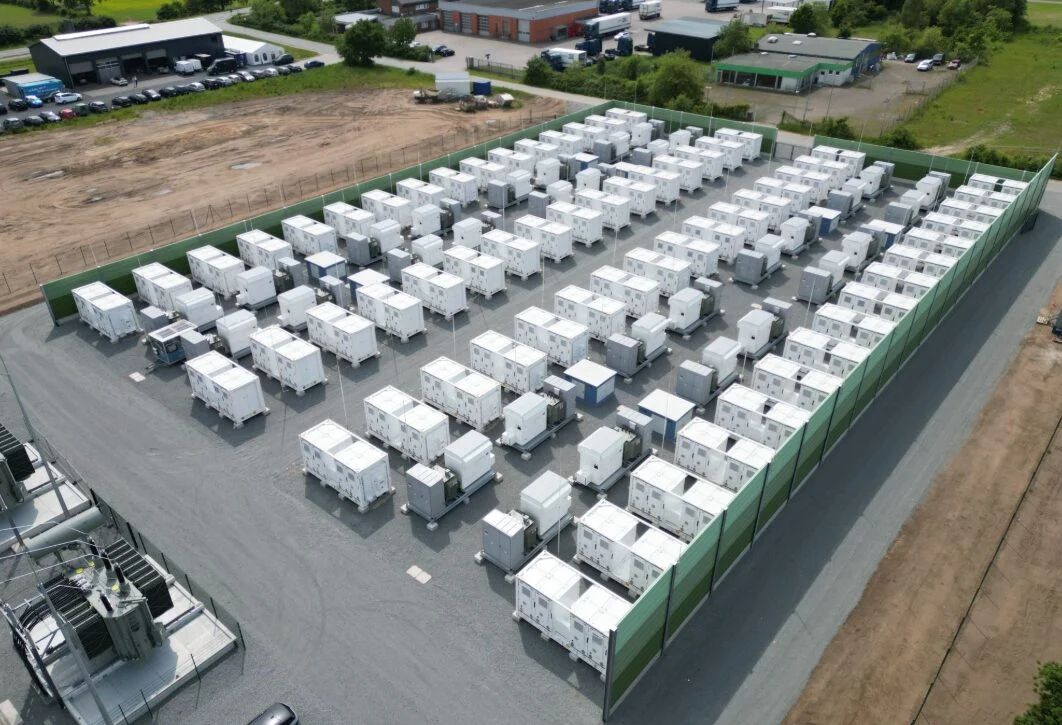
As of July 2026, Germany has about 24 GWh of battery storage on the grid, a 22% increase from last year. The growth pipeline is huge: the four main transmission system operators have received almost 700 grid connection requests, totalling 250 GW. But 2026 will be the year that determines if this boom leads to lasting infrastructure or gets stuck in permitting.
The gap behind the headline numbers
The picture for large-scale storage is less optimistic. Systems over 1 MWh make up only 3.5 GWh of Germany’s total. Fraunhofer ISE estimates that Germany will need 104 GWh of storage by 2030 and up to 180 GWh by 2045, with about half expected from large-scale systems. There is a huge gap between current capacity and these targets.
Regulation is a big reason for the uncertainty. In November 2025, the Bundestag gave large BESS projects special status under building law. But just weeks later, another law made the rules stricter, limiting this status to sites within 200 meters of a substation or next to generation plants of 50 MW or more. Developers who relied on the first law had to adjust quickly. The first-come, first-served rule for grid connections above 100 MW was also removed, and the new process is still being discussed.
Frederik König from Berlin defines this the sector’s "moment of truth," and warned that flexibility will become "the key currency of the power system."
Why 2026 decides the market
Several important changes are happening this year. The EU’s approval for Germany’s renewable subsidy framework (EEG 2023) ends on 31 December 2026, which will push the market toward a system focused on capacity and flexibility. Germany plans to tender 10 GW of gas-fired capacity and 2 GW of technology-neutral capacity, which will include BESS. A full capacity market is planned for 2027.
The grid fee issue was addressed first. In its 27 May 2026 update to the AgNes network tariff reform, the Federal Network Agency confirmed that existing batteries, and projects that reach a final investment decision before the new rules take effect and are commissioned by 4 August 2029, will keep their 20-year grid fee exemption.
New installations without this protection will face a proposed capacity-based charge of €4-7 per kW per year, while the earlier idea of an energy-based charge has been dropped. A formal consultation is happening this summer, and the final rules are expected by the end of 2026.
The lesson for battery owners everywhere
German developers are seeing a lesson that matters across Europe: business models based on just one revenue stream are risky. If a battery is built for only one service, it is vulnerable to rule changes and new competitors. Batteries that earn money from several sources, like wholesale arbitrage, aFRR, mFRR, capacity payments, and local congestion services, spread out the risk and can earn more over time.
Stacking revenue streams is a coordination challenge. It requires good forecasting, optimising across markets with different rules, and managing each battery’s wear and warranty limits. Most battery owners do not want to handle this themselves. That’s why aggregation platforms exist: to connect batteries to all available markets and switch between them as prices change. FLEXO’s battery monetisation and VPP modules are designed to solve this problem.
What to check before year-end
Here are three questions to consider now, whether you manage a 250 MW portfolio or just a few 1-5 MW systems. Can your projects reach a final investment decision before the AgNes rules are set, so you can secure the grid fee exemption for commissioning by 2029? Are your planned sites within 200 meters of a substation or next to a generation plant over 50 MW, where building privileges still apply? And is your revenue model ready for a capacity market in 2027, or does it rely on just one income stream? We expect that by the end of 2027, portfolios with multiple revenue streams will become the standard for financing in Germany, while single-stream business cases will find it hard to get funding.
Germany’s regulatory consultations will continue throughout 2026, and their results will shape market design discussions in other countries as well. Flexibility is becoming central to how the market works. The ability to shift between different revenue streams will set apart strong business cases from those that get left behind.
Are you operating or planning BESS assets in Germany? Join the Clean Energy Club, our community of over 1,700 energy professionals, to connect and share insights.
FAQ
Why is 2026 a decisive year for German battery storage?
Three things converge: the EEG 2023 state aid approval expires on 31 December 2026, Germany tenders 2 GW of technology-neutral capacity that explicitly includes BESS, and the Federal Network Agency finalises its AgNes grid fee reform. Together they reshape every German storage business case.
Will existing batteries in Germany lose their grid fee exemption?
No, based on the Federal Network Agency's 27 May 2026 update. Operational systems and projects that reach final investment decision before the final AgNes determination, and are commissioned by 4 August 2029, keep the 20-year exemption. New installations face a proposed capacity charge of €4-7 per kW per year.
What is revenue stacking for a battery?
Earning from several value streams with the same asset: wholesale arbitrage, aFRR and mFRR balancing reserves, capacity payments and local congestion services. Stacking spreads regulatory and price risk, and it needs software that co-optimises across markets with different rules and gate closures.
How big is Germany's storage gap?
Fraunhofer ISE puts the need at 104 GWh by 2030 and up to 180 GWh by 2045, with roughly half from large-scale systems. Installed capacity stands at about 24 GWh as of July 2026, of which only 3.5 GWh is large-scale.
Sources:
- Energy-Storage.News: 'Moment of truth': The 2026 regulatory agenda for large battery storage in Germany (guest post by Frederik König, CC: Collective)
- ESS News: Major German BESS outcomes: Grid fee exemptions remain, higher costs for prosumers (28 May 2026)
- Herbert Smith Freehills Kramer: German grid fee reform for BESS: BNetzA preserves grandfathering protection and unveils future framework


Comments